Twitter. 16 years wasted.
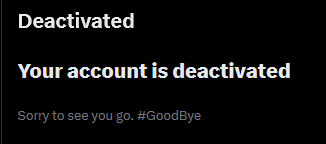
Sixteen years. SIXTEEN. Almost seventeen. I made my account in 2009. Life was completely different in 2009. In 2009 I was cracking skulls in Arkham Asylum, complaining about N00b Tubes in Modern Warfare 2, watching District 9, already getting tired of everyone quoting Taken, struggling to “get good” at Demon’s Souls, watching SeaNanners and Hutch on Machinima Respawn, and getting my braces off. Oh and my house got flooded and an entire basement's worth of stuff destroyed. And we had an unprecedented ice storm that destroyed much of what we had in the back yard. 2009 was weird, but things are very different today.
Actually, though, fuck this.
I wanted to write something to eulogize deactivating an account I’ve had for half of my time on this earth, but that’s wasted energy.
Twitter itself was never that significant.
Sure, I made (or rather utilized Twitter as the least-resistant path of connection for) a few friends through Twitter over the years. I’ve followed artists and fellow creators and felt like I had more access to them than anywhere else.
But in reality? What did Twitter ever bring to my life? In what way has my life been made better, sixteen years on, as a result of making an account on there?
I can’t really say I know of any such way.
It was a time sink. A way for me to feel like I got some socialization during rough times. I followed some cool people, stayed more up to date with some projects, and I was probably influenced to spend more money than I otherwise would have.
But so, so much of that socialization was spent fighting, falling for rage bait, being pulled into the vicious cyclone of being convinced everyone around me was becoming bigoted/racist/insufferable scum and that the world was falling apart. (Not that it isn’t, but I didn’t need to obsess over it on an hourly basis, did I?)
Sure, I connected with a few brands over Twitter and made professional connections, got some free merch and made a few bucks through some brand deals.
But how much money did I spend following projects or products a little TOO closely? How much might I have turned away by showing myself so transparently, and being unable to avoid conflict?
Twitter was the ultimate system of FOMO abuse. “Everyone” – especially in context of those terminally-online – everyone was there, posting the “latest updates,” sharing early peeks at their work or the fastest links for limited run pre-orders, or giving opportunities to collaborate. You might even get the chance to garner the attention of someone special, someone you looked up to, only for them to be an absolute shithead in response to you.
That’s what you get for “wasting their time” - forgetting that they chose to waste their own time by logging into that hell-site in the first place.
Maybe you’d follow that musician you’d always adored, and maybe they’d like one of your replies one day! And the next day, a cool creator and builder you’d followed since before Twitter even existed would reveal themselves to be a raging anti-vaxxer.
You “should have known” someone who otherwise believed in science would fall down such a dark hole during isolation.
Maybe you’d win that free tablet PC by happening to post how you actually enjoyed the split-view feature of Windows 8 while doing college coursework! And maybe a group of unshowered and unloved teenagers would tell you to go kill yourself nonstop for weeks.
You said something a popular account didn’t like (or were just queer), so you deserved it.
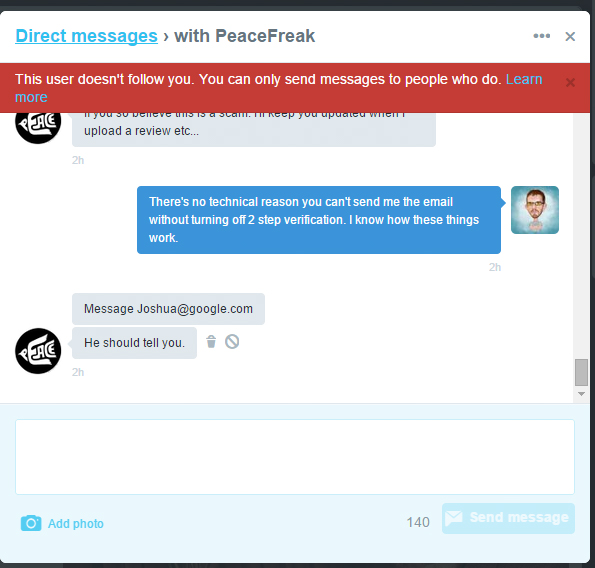
Maybe you’d finally get your “moment” getting your biggest work yet shared out by store PR reps and fellow creators. And maybe you’d then become tech support for other creators, have them all happy to demand your assistance at any given moment – and even outright steal your work – without giving a second thought to crediting you or signal boosting in any way.
You made posts helping people, you were obligated to help anyone for free.
Twitter was a hellscape long before Elon Musk took over. It started as a fun place to keep up with people and perhaps have a backup feed when YouTube notifications stopped working or everyone collectively forgot how to run a blog or newsletter or RSS feed. But after that, once it got big enough? Hellsite. Dumpster fire.
You can’t put everyone in the same room, obsess over retention (and thus throw moderation out the window) and expect anyone to have a good time.
It had been bad for years, Elon just tore back the illusion that any good intent was ever present and cranked all the “bad vibes” dials up to 11.
But if you were a part of certain sub-cultures, or of a certain demographic, it felt like you HAD to be there. That’s the feedback loop all social media sites manipulate you with; it’s a parasite. If you post a video link and get a dozen or so likes, retweets, and responses – ESPECIALLY if one of those responses was along the lines of “this wasn’t in my YouTube feed, I’m glad I checked here!” – Twitter felt critical to your viability as a creator. “Go where your audience is” was the regular advice of the time.
In the early “fun” days, interactions felt like a currency; and it was rewarding to keep collecting it. To feel happy that someone wanted to interact with you, and to make them happy interacting back.
In the attention economy, any amount of attention feels like sustenance, and any consideration against selling your soul for more felt like a threat to survival.
But in reality? None of that contributed to the bottom line very much. Twitter never contributed significantly to my views, revenue, or broader internet relevance (at least not in a good way) aside from the random shoutouts. Those shoutouts could have taken place elsewhere.
EVERYTHING on Twitter worth participating in could have taken place elsewhere. And been better for it.
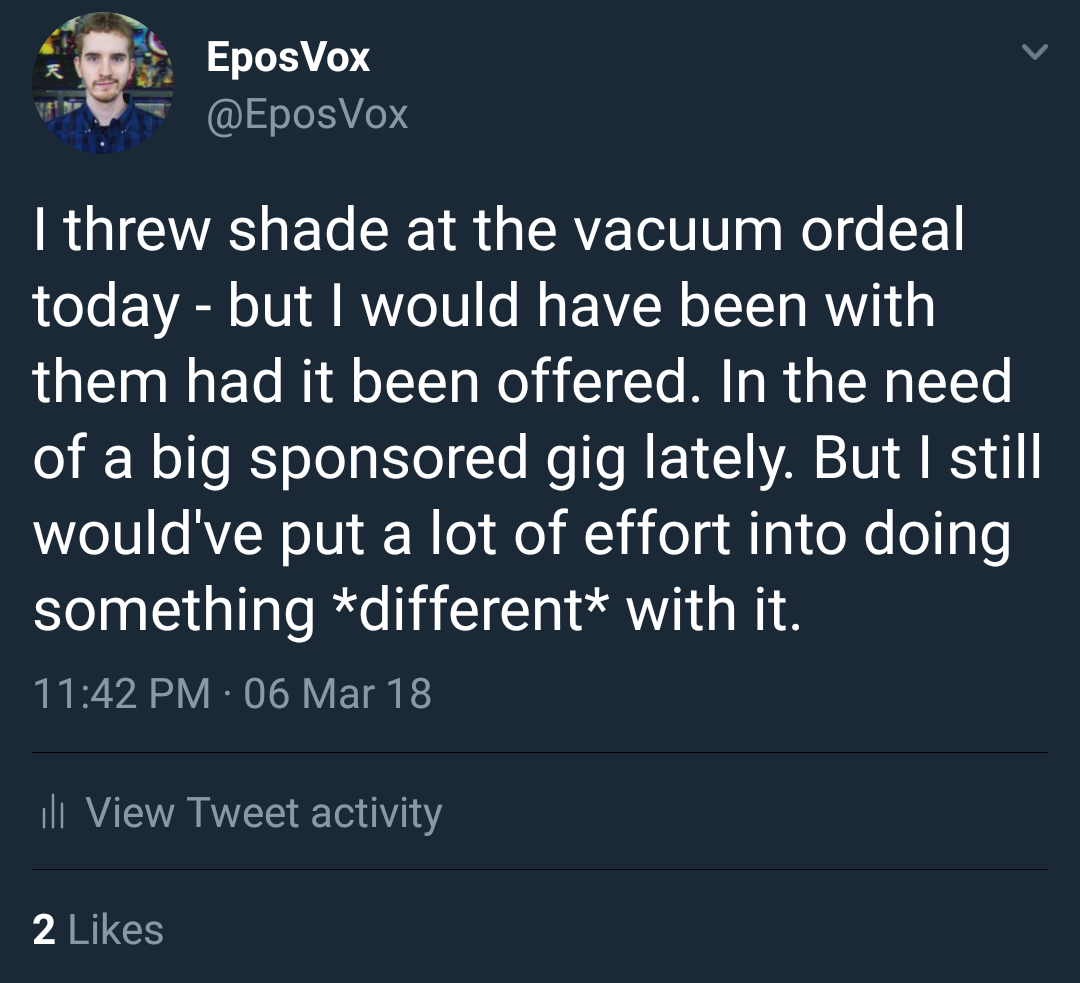
Yelling your opinion about the latest game or trend in the industry might be cool, but have you considered having actual conversations with real friends about these things, with respect for one another and room for nuance? Perhaps where one builds a deeper understanding and learns why someone else has a different perspective?
Collectively getting the attention of a famous person might be fun, but have you considered doing something meaningful with your time and spending it doing something other than spam? Or using that collective action for good?
At BEST, Twitter increased my baseline cortisol levels for over a decade – whether it was the craving to keep up with trends or maintain relevance to feel like I’m being better at my job, or keeping up with notifications and replies and constant pleas for my attention by others, or actual direct (or indirect) conflict and arguing.
I have that fun ADHD quirk where I just can’t stand being misunderstood, unheard, or leaving a conflict unsettled. It led to countless instances of a meaningless argument with people who were truly wastes of oxygen ruining entire days at a time.
If “worrying is worshipping the problem” then sticking to social media out of FOMO is being in a fucking cult. (Edit: I went to find a source for this quote and all I can find is religious nonsense. It's a fun quote, but I choose to engage with it without context of its origins.)
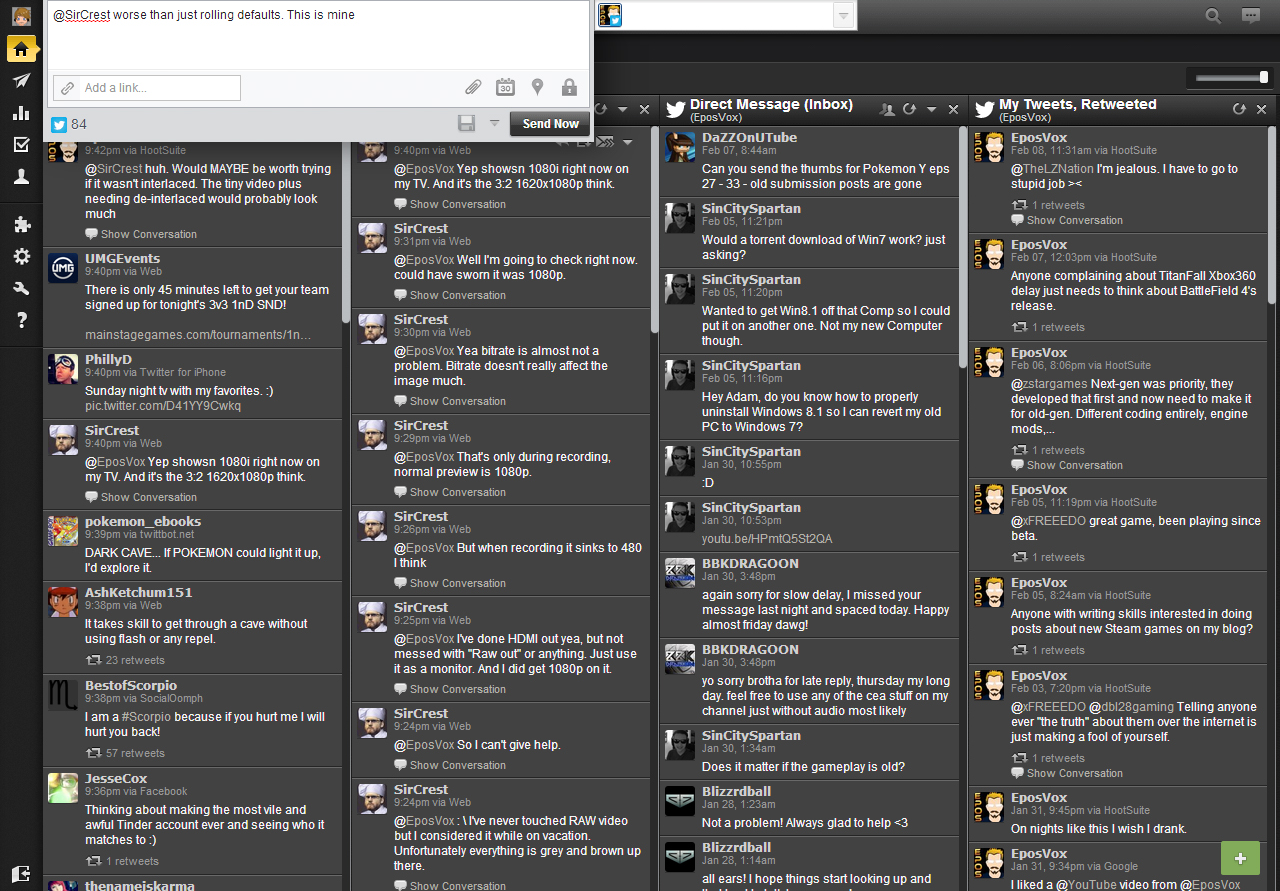
If that’s Twitter at its best, I’m scared to attempt to describe what it was at its worst.
Trying to describe it concisely fails me. Instead I think back to one of the darkest phases of my life.
2020 brought a roar of racial (and other social) conflicts with police killings of black men, BLM protests, a stretch of queer/trans lynchings. It brought dread, fear, instability, and isolation with the COVID-19 pandemic. It brought huge political strife with the election cycle. All of those things made just about everyone who wasn’t living under a rock pretty miserable and abrasive. We all wanted to fight one another.
Add in special ingredient X, my son was born right as lock-downs went into full gear. Our delivery plans got thrown out the window, delivery itself was traumatic for reasons I don’t need to disclose here, and my wife and I were left to be clueless, isolated parents at the start of a scary pandemic with a baby who had colic for the first 6 or so months.
We were alternating shifts: My wife would stay up during the day to care for him, and I would take the nights.
Sleep deprived and defeated, I was miserable. And the social web was a raging volcano of social conflict, widespread misinformation and propaganda, misplaced anger, arguing over everything.
But I had to be on Twitter. It was my job. It was a requirement. I couldn’t miss out. I couldn’t let my work suffer. So naturally I had to wade into it.
It made me a worse person. It forced me to look at the worst of humanity and try to understand how we were even the same species. It pushed me to take more abuse and damage than one person should ever be facing in their lives and then it still expected me to turn around to smile at every new person and be a good dancing monkey.
I couldn’t do it. I burned bridges, I nuked relationships, I lost followers, friends, and I didn’t care.
Arguably, I still don’t. You don’t get to treat me a certain way and me be nice to you, period.
But we never should have been put in that room to find out.
I was already miserable and, thanks to Twitter, I was left broken, empty, disillusioned, and full of hate. And I mean full of it. I hated everyone – the people who would join such reckless or harmful causes and movements, the people who were against them but thought spending all their time dunking on them via Quote Retweets and giving them attention was the way, the people who attacked me, spammed me, the people who thought I’d just be their 24/7 free tech support. Eventually I’d come to hate just about anyone who replied. Anyone who would say something that MIGHT rub me the wrong way or ask something of me. And I started to hate myself. I’d hate myself for the things I’d say, for the ways I’d say them, for participating at all and for still being on that hellsite. And, of course, I’d hate the site. The app. Whatever it was. But I’d still log in. Every day. Every hour. I couldn’t miss out.
Elon buying Twitter and turning it into a Nazi Bar was honestly a relief. The global “mask off” moment quickly helped me identify some lines in the sand, but it was also a significant enough crack in the foundation of my abusive relationship with the site that it was a guarantee I’d delete my account eventually.
(I would have done it this time last year had I not just signed a contract involving Twitter posts as part of my deliverables when I had planned on deactivating it.)
We humans have this bad habit of thinking of – and, then, treating – other humans as things rather than people and it leads to some pretty horrifying consequences.
There are survival reasons for doing so – needing to not think of the “enemy” or those doing you harm as people is often required to survive fighting them. But ultimately it leads us to saying and doing horrible things to each other.
Social media just amplifies that. It’s impossible to handle the scale of messages – in a feed or in interactions – that one gets via the modern “everyone in one room” social media framework. It’s just too much. We can’t see every individual as people, it’s information (and empathy) overload. Combine that with the massive surge in bot activity the last 5-8 years and it’s not even guaranteed they all ARE humans, anyway.
The model is fundamentally broken. There’s no saving it. Jumping ship to another site with a prettier banner only delays the problem. If everyone else also jumps to the new ship, it still gets overcrowded and still sinks.
Sure, you could federate a whole fleet of ships and balance the load – but when most of the passengers expect the same experience as the single big ship, and thus use it that way, they still overcrowd the space and sink most of the fleet.
My last 16 years on Twitter manipulated the way my brain works and abused me in ways I may unpack for another 16 years still. And I won’t be treated like that again. I will not let myself end up in that same spot again.
The internet can still be alive. And it can still be social. But we have to think of, and manage, it in terms more realistic to our real-life social analogs and capacity.
I might be able to give a talk in front of thousands (or millions?) of people, but I can’t handle interacting with them all at the same time.
Instead, we need to focus our efforts on building up smaller rooms, more diverse and focused communities where the priorities are good times and vibes, safety, moderation, and NOT retention. We need to divide up – and travel between our spaces – rather than expecting everyone to just form different huddles all in one space.
That means instead of blasting posts about a new game or movie, you join groups of friends and have real discussions about it. It means accepting slower means of communication, sometimes sending direct correspondence again, maybe using forums again. It means taking back ownership over our online and social experiences instead of handing everything over to the most selfish and greedy people on the planet.
I don’t mourn my Twitter account. Instead I mourn the 16 years’ time spent using that piece of shit. I can literally think of more ways than I can count that my life would be markedly better had I spent my Twitter time doing different things.
Actual time wasted on my lifespan – across half of my entire lifespan thus far – that I can never get back. I won’t make that mistake twice.
It all felt so important at the time, in the moment. But it took at most 2 weeks of not logging in to realize everything was better without it.